Game design · CCA · 2025
Aquasition.
A family-friendly water conservation card game.
Goal: Be the last player remaining. You are instantly eliminated if your Water Meter reaches 10 points or more.
The problem
Water is invisible.
Most people don't think about how much water they use. It runs, it goes away, it shows up again the next day. Easy to ignore.
So we started by asking why people waste it.
invisibility
Water runs, water disappears. Out of sight, out of mind.
habit
Long showers. Running taps. Nobody's counting.
bystander effect
Someone else's problem. Someone else's bill.
weak education
Facts on a poster don't change behavior.
The brief became simple: close the gap between awareness and behavior. Make it personal. Make it social. Make it a game.
Exploration
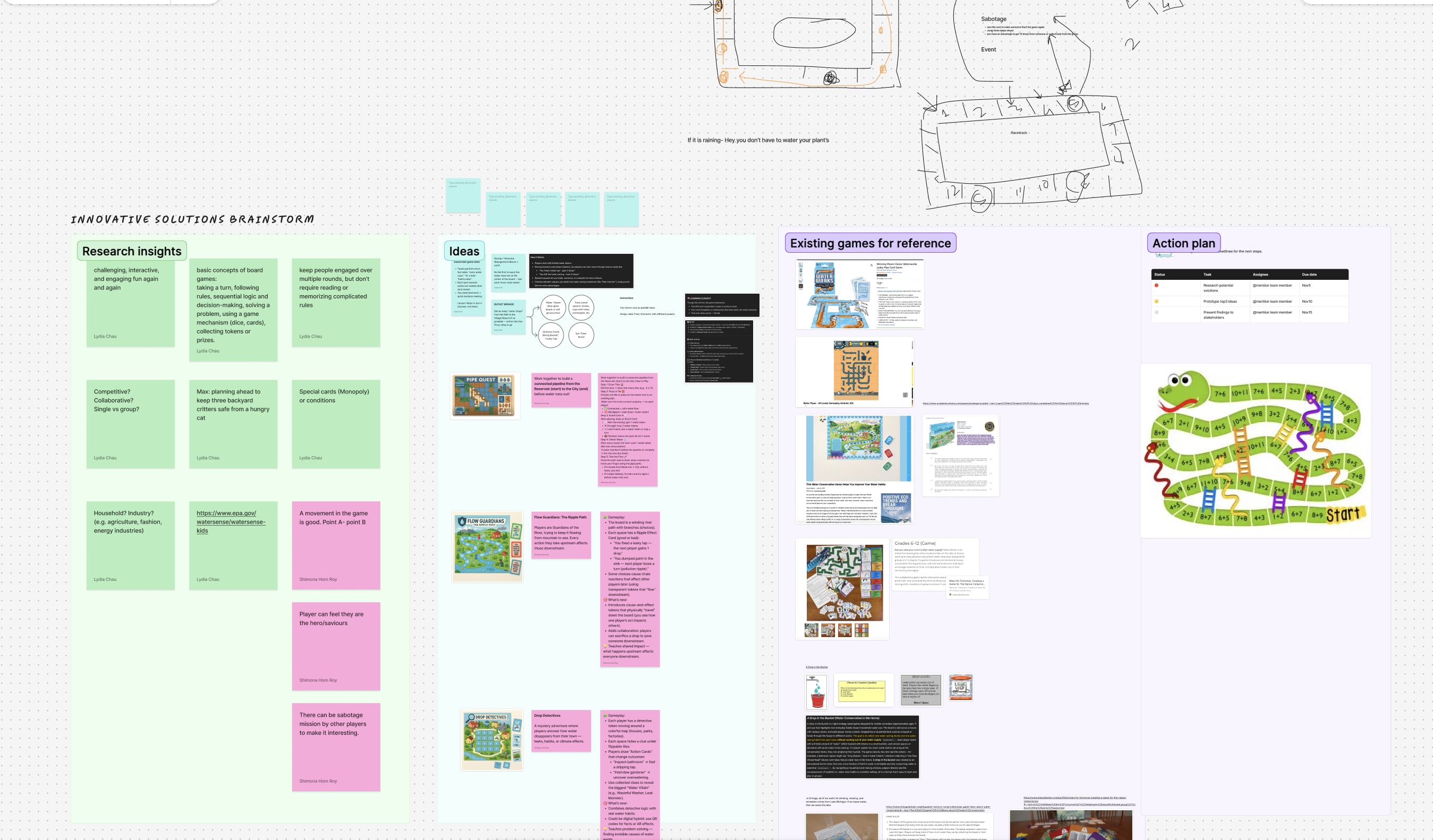
Three ideas. Two flops.
Before Aquasition, we sketched three directions. None of them quite worked. That is where the real game started to take shape.
Water Tower
Stack tokens to represent rising water levels.
Pretty. Not tense.
Flow Guardians
Collaborate to protect a river's flow.
Friendly. Forgettable.
Aqua Uno
Card trading and matching with a water twist.
Fun. Lesson didn't land.
Then we added one rule: hit 10 water points, you're out. Suddenly, people cared about their own water. And everyone else's. The game wrote itself from there.

Game design philosophy.

Engagement.
Competitive sabotage mechanics (Attack Cards) and deep economic decisions (the Marketplace) to keep players emotionally invested.

Learning through play.
Your Water Meter is a penalty. Every wasteful action fills it up. Reach 10 points and you are eliminated.
Social interaction.
The game forces discussion, defense, and fragile alliances. The Attack and No Thanks cards create a dynamic social loop of risk and negotiation.
Replayability.
The randomized Event deck and the constantly shifting Conservation Marketplace guarantee that players must adapt their strategy every time.
Game components.
2 essential resources and 3 decks.
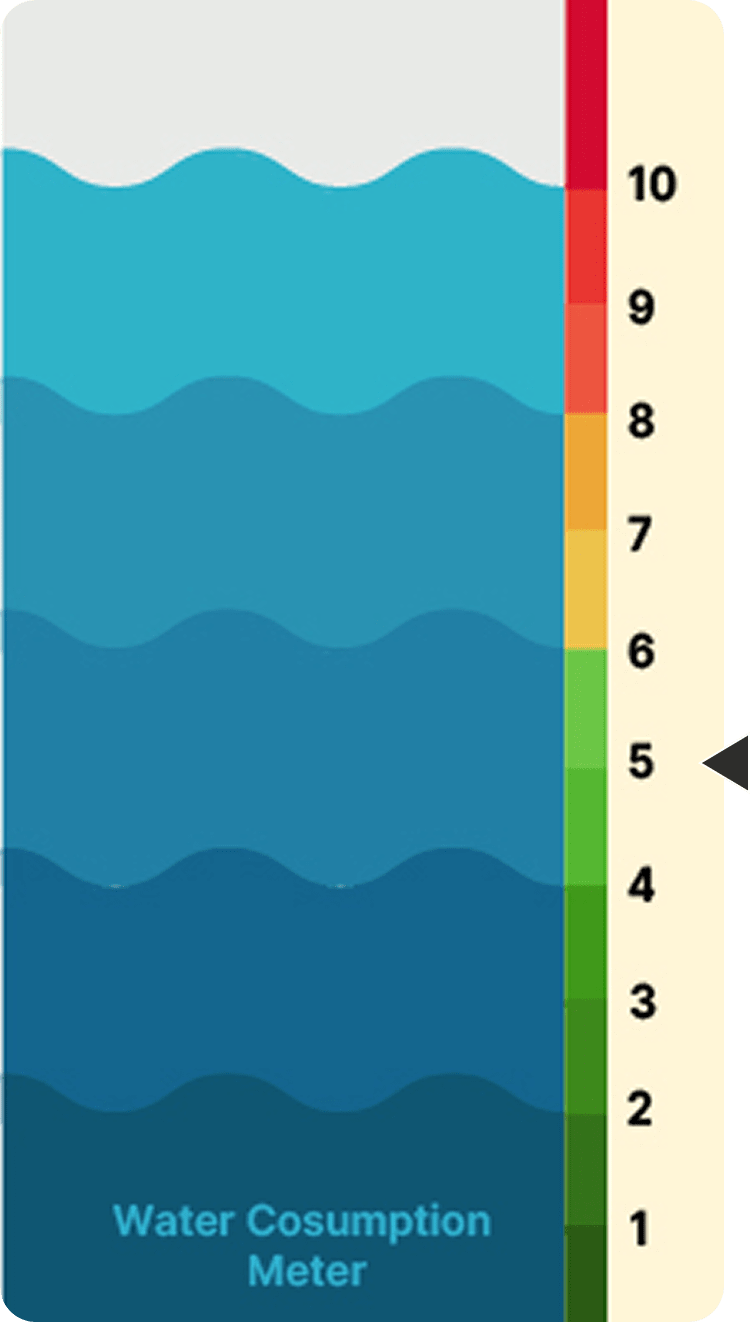
Water meter
Replaces physical tokens. Reach 10 and you're out.

Coins
Currency for buying Conservation cards from the Marketplace.
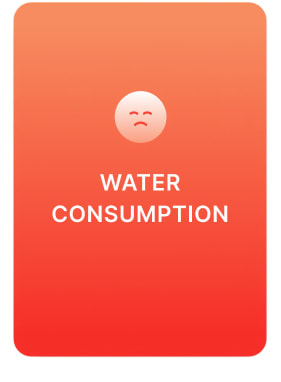
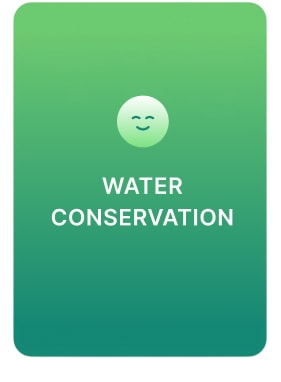

3 decks
Consumption, Conservation, and Special Cards drive the game.
Rules & turn actions.
Your Water Meter reaches 10 points and you are out.
Action step play in any order
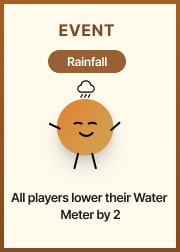
A. Play 1 Economy card and 1 Attack or Event card from your hand
 +1
+1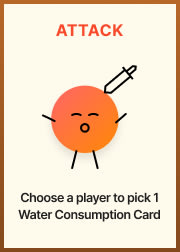 /
/
B. Buy from the marketplace
Spend coins to buy one Conservation Card from the Marketplace. The effect applies straight away, the card is discarded, and the Marketplace fills up again.
Marketplace refills
→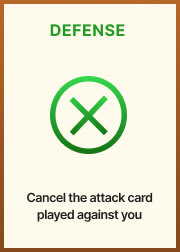
Defense: "No Thanks"
When someone plays an Attack card against you, play this card immediately to cancel it. You do not need to wait for your turn. Remember to refill your hand to 5 cards on your next turn.
Draw step
Draw from the Special Card Deck until you have 5 cards in hand again. Always end your turn with 5 cards.
SPECIAL CARDS
Special rule.
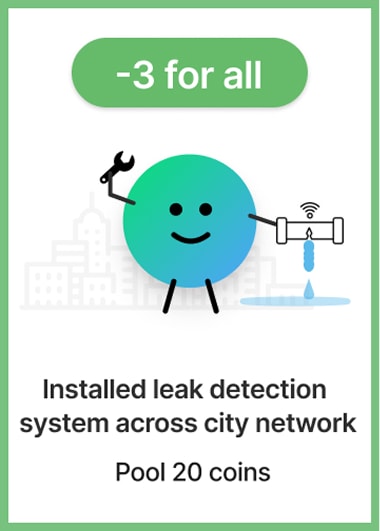
At any point, players can choose to pool 20 coins to purchase the Special Conservation Card.
Once bought, all players' water meter points immediately lower by 3. A rare moment of teamwork in an otherwise competitive game.
Card design
The cards.
Three decks run the game. Consumption cards punish. Conservation cards redeem. Special cards create the social chaos that makes every round unpredictable.
Water Consumption
Raises your Water MeterReceived only when other players target you with an Attack card. You don't choose to draw these.
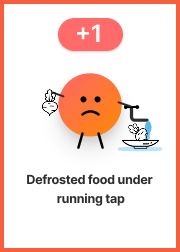
Sent to you by another player's Attack card. Adds 1 point to your Water Meter.
+1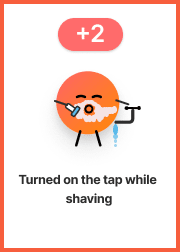
Sent to you by another player's Attack card. Adds 2 points to your Water Meter.
+2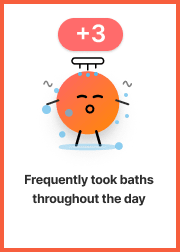
Sent to you by another player's Attack card. Adds 3 points to your Water Meter.
+3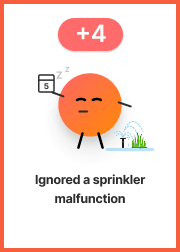
Sent to you by another player's Attack card. Adds 4 points to your Water Meter.
+4Water Conservation
Lowers your Water MeterPurchased from the Marketplace by paying coins. You actively choose when to buy these.
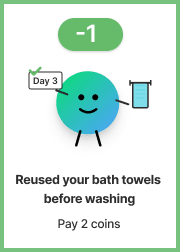
Pay 2 coins from the Marketplace. Lowers your Water Meter by 1 point.
−1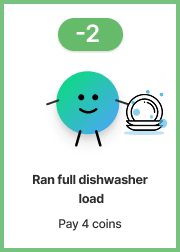
Pay 4 coins from the Marketplace. Lowers your Water Meter by 2 points.
−2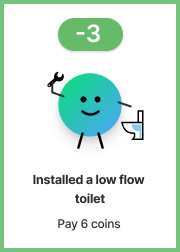
Pay 6 coins from the Marketplace. Lowers your Water Meter by 3 points.
−3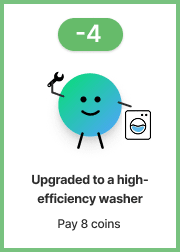
Pay 8 coins from the Marketplace. Lowers your Water Meter by 4 points.
−4Special Cards
The wild cardsCollect 4 coins from the bank. Save them up to buy Conservation Cards from the Marketplace.
+4 coinsForce another player to draw 1 Water Consumption Card. This raises their Water Meter.
↯Cancel any Attack card played against you. This can be played out of turn. Keep one in hand at all times.
✕Contamination: the player with the highest Water Meter must draw 1 Water Consumption Card.
!Hands on
Try it.
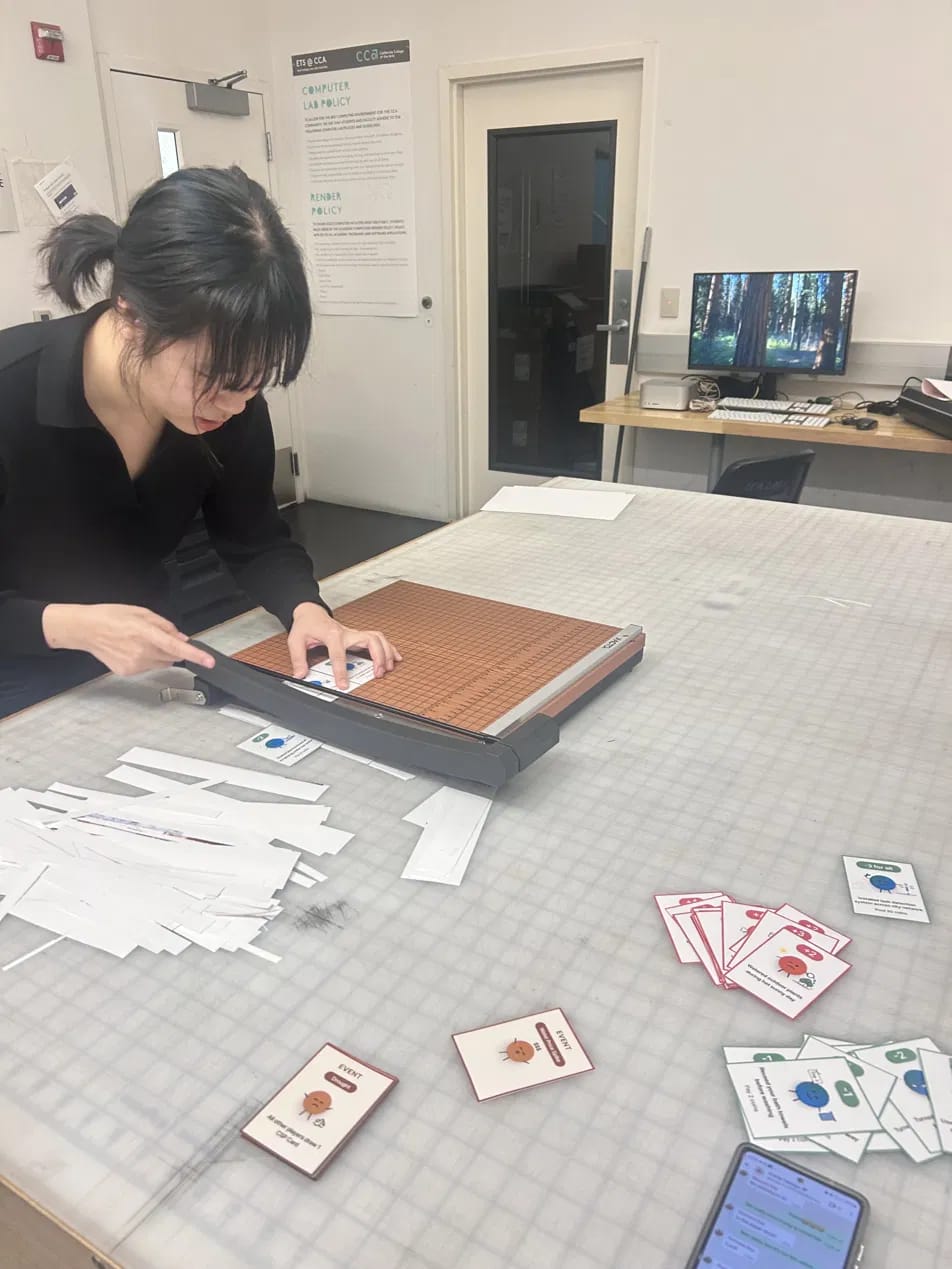
The card system was the most fun part to design. Each card features a round character whose expression shifts with the stakes. Click through the cards and explore how the visual language evolved from v1 to v2.
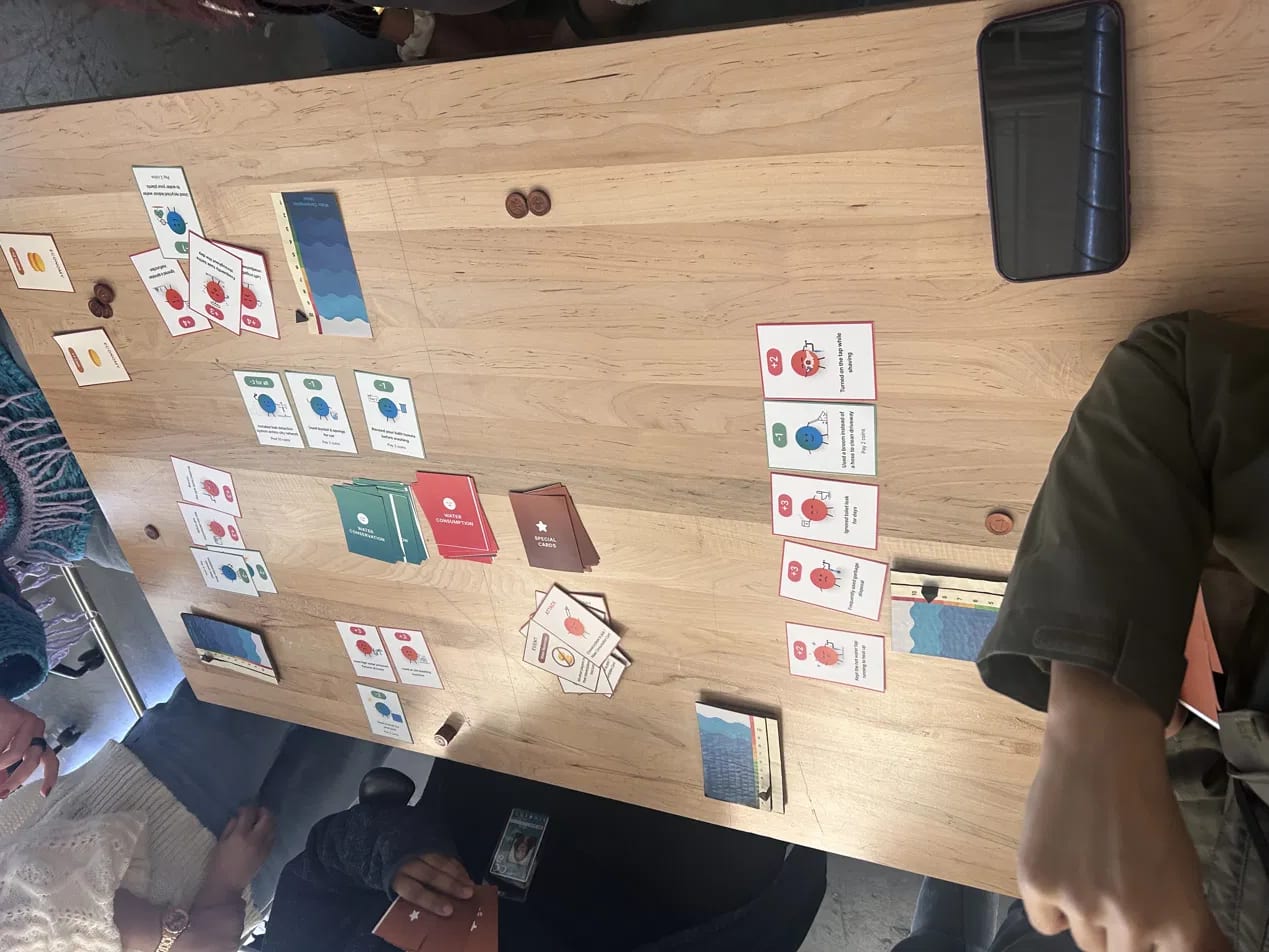
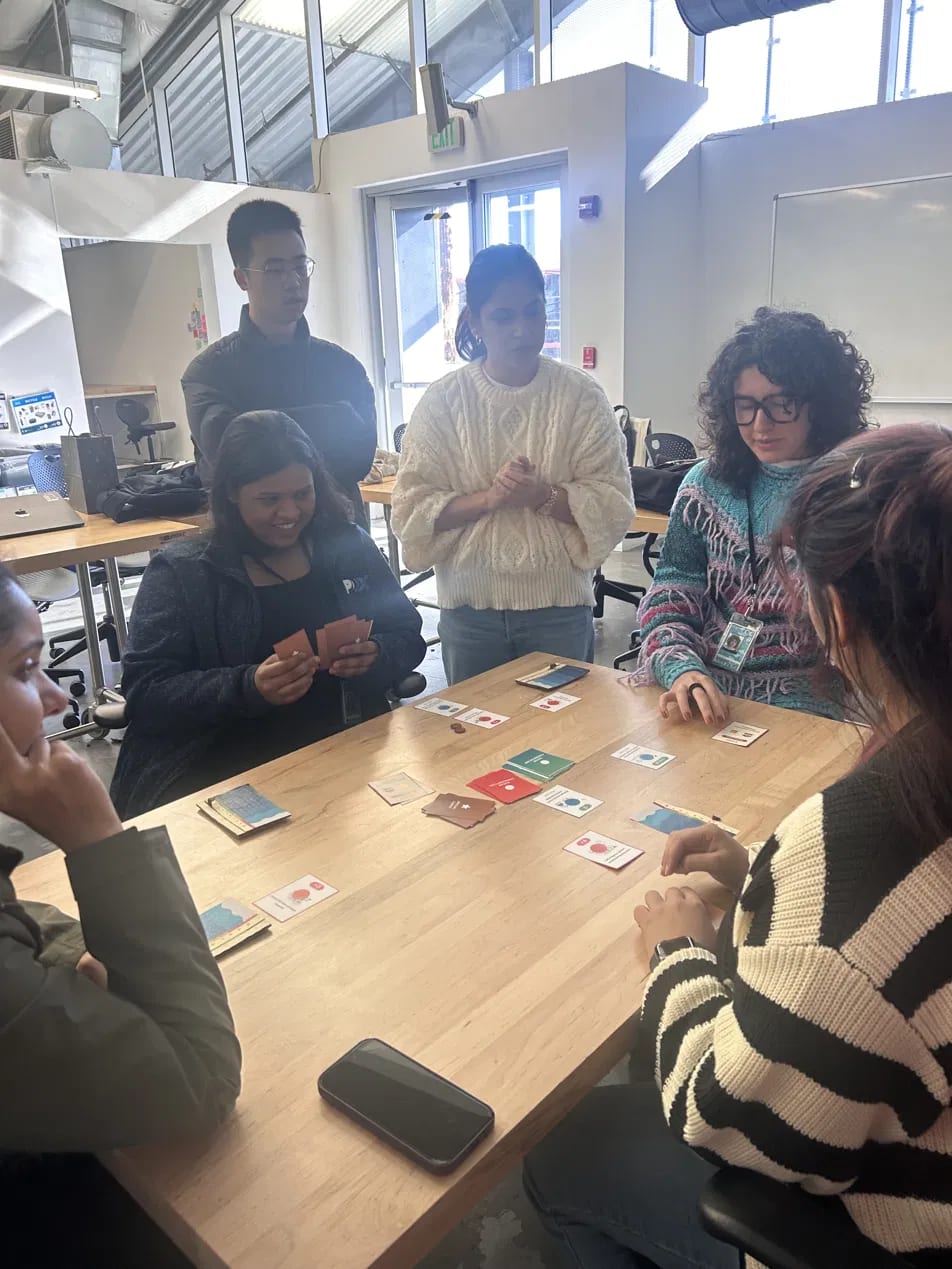
We playtested with real people across multiple rounds at CCA. Watching strangers argue over Attack cards and scramble to buy Conservation cards told us the design was working.
Here is a clickable walkthrough of a full game round.
Reflection
What stuck.
What playtesting taught us.
Watching real people play the game taught us more than any design review. Players skipped rules, misread cards, and ignored the Water Meter until it was too late. We simplified the turn structure twice before it finally felt natural.
What early feedback changed.
Early critiques revealed a key problem. Players were trying to collect more Water Tokens, treating them like points to earn rather than a penalty to avoid. That was the opposite of what we wanted. So we replaced the tokens with the Water Meter, a visual scale that made rising consumption feel like a warning, not a reward. This shift changed how players related to the game. Alongside this we refined the card language, simplified the turn order, and introduced the Special Community Card to create a moment of shared stakes.
What we would do differently.
We underestimated how long it takes new players to get started. Every playtest opened with ten minutes of confusion before anyone had fun. A simple quick start card, or a tutorial built into the first round, would have fixed this. Something to work on in the next version.